
Have you ever wondered how some sites get featured on the first page of Google while other sites barely make an impression? This article will be helpful to anyone who has just launched their site or is beginning to delve into digital marketing and SEO optimization for beginners.
SEO optimization for beginners sounds like something that will be hard to learn; however, the concept is quite simple. SEO stands for Search Engine Optimization; it is an optimization of your site to help search engines interpret your content and let your audience find valuable information.
It is not necessary to know all SEO techniques right away. It will be enough to learn the basics of it and apply them gradually to create a solid background for your site.
In this article, we will discuss the basics of SEO optimization: keyword research, on-page SEO, technical SEO, off-page SEO, local SEO, EEAT, SEO tools, and SEO mistakes to avoid.
What Is SEO?
SEO is an abbreviation for Search Engine Optimization. This process consists of improving the website and its contents in order to achieve higher visibility in the organic search results.
When users make a request through Google, the search engine takes into account many factors to decide which pages can be considered as suitable for this search.
For instance, if users look for “SEO Specialist in Thrissur,” Google makes efforts to show web pages relevant to SEO services or specialists.
SEO will allow you to optimize your website not only in terms of understanding by search engines but also in the sense of better experience for the visitors.
In contrast to paid advertising, the organic SEO process does not involve any payments to Google for each user coming to your website via organic search.
Why Is SEO Important?
Having a website doesn’t guarantee that your website will be found by people.
You may have something of value to offer, but with no optimization, your prospective customers might never come across your website using the search engines.
The following are some benefits of having a sound SEO approach:
- Attracting more traffic
- Improving online visibility
- Reaching your target audience
- Generating leads
- Credibility
- Improving the experience of your users
SEO is particularly helpful for small business owners and individuals since they can attract people who are looking for something relevant.
How Do Search Engines Work?
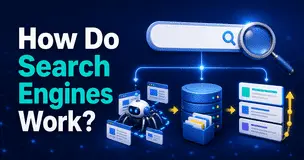
Before understanding the concepts of SEO Optimization for Beginners, one needs to know the workings of a search engine.
The functioning of search engines involves three distinct procedures.
Crawling
In search engine crawling, webpages are discovered using links and exploring content on the Internet.
Indexing
Once the page is discovered, the content of the page is analyzed and details about the page are stored in the index.
Ranking
In case of a search query made, the search engine ranks the pages based on relevancy.
This is why just uploading your webpage is not sufficient. Your site should be available, relevant, comprehensible, and useful.
Keyword Research
Keyword research is one of the basics of SEO Optimization For Beginners.
Keyword is a term people use while searching in search engines for information, products, or services.
For instance,
- SEO optimization for beginners
- SEO services in Thrissur
- How to learn SEO
- Best SEO tools
- Local SEO for small businesses
Keyword research lets you know what people are looking for in search engines and what topics to cover in your content.
But it’s not just about choosing keywords based on their search volume.
Relevance, competition, search intent, and needs of your audience also matter.
For instance, the keyword may be popular and have thousands of searches per month.
But it’s not relevant for your website.
It’s necessary to choose relevant keywords based on your audience and content.
To learn more about keyword research, visit our complete guide to keyword research.
You can link this section internally to your existing Keyword Research blog post.
On-Page SEO
On-page SEO involves optimizing components that appear within your website’s pages.
Key On-Page SEO Optimization For Beginners Components Are:
SEO Title
The title must explain the purpose of the page in question and attract the user to click through.
Headings
Use H1, H2, and H3 headings to make your content coherent. Having an easy-to-follow heading hierarchy will make it easier for users to read long articles.
Meta Description
Meta description provides a brief summary of the content of the page and affects users’ decision-making process regarding clicking on the search result.
URL Structure
URLs must be short, relevant, and descriptive of the content of the page.
Internal Linking
Internal links connect pages of your site. They help users navigate between related articles and allow search engines to determine the interrelation between pages.
Image Optimization
You must have relevant images, use relevant file names and proper alt-text for the images. You may need to compress images to avoid slowing down the performance of your site.
Most Importantly, Write Naturally Rather Than Stuffing Your Text With Keywords To Increase Keyword Density.
Off-Page SEO
Off-page SEO Optimization For Beginners is the process of doing things outside of the site that can increase the authority of your site.
An example of off-page SEO is backlinking. Backlinking involves getting links to your website from other websites.
But just because you have many backlinks does not mean good SEO. Relevance and quality matter.
To gain valuable backlinks, you can:
- Create unique and valuable content
- Create useful resources
- Build real business connections
- Get relevant business mentions
- Promote valuable content
- Do not use manipulative link-building tactics.
Local SEO
Local SEO allows businesses to target individuals looking for goods or services in a particular geographic region.
As an illustration, a digital marketer who wants to target clients from Thrissur will want his/her website to rank well for searches on digital marketing services in Thrissur.
Some local SEO actions include:
- Optimizing your Google Business Profile
- Keeping correct business details
- Producing appropriate local content
- Getting genuine customer testimonials
- Acquiring appropriate local citations
- Optimizing location-related web pages
Local SEO works best for companies serving clients in particular regions or cities.
Technical SEO
Technical SEO Optimization For Beginners concentrates on the technical aspect of your website.
Some of the critical technical SEO considerations include:
- Website load time
- Mobile-friendliness
- Website Security using HTTPS
- XML sitemap
- robots.txt
- Crawling ability
- Indexing
- Broken links
- URL Structure
- Core Web Vitals
For instance, if your website appears well on a computer but is hard to navigate on a mobile device, people will exit the site very quickly.
Using tools such as Google Search Console will help you diagnose any problems related to indexing and search.
A technologically sound website helps search engines easily access and interpret your website’s content.
SEO Tools for Beginners
Do not require many SEO Optimization For Beginners tools. Rather, there are some good tools that may offer insightful information to you.
Google Search Console enables you to keep an eye on your search performance, indexing, clicks, impressions, and queries.
Google Analytics will tell you how your visitors engage with your website.
Google Keyword Planner may assist you in finding some keywords.
Google Trends will make you learn about the shifts in search interest.
Also, you may use other tools like Ahrefs, Semrush, and Ubersuggest for keyword, competitor, and backlink analysis.
The point is not the number of tools you are using, rather, how wisely you are using those tools.
Common SEO Optimization For Beginners Mistakes Should Avoid
Keyword Stuffing
Repetition of the same keyword for no apparent reason can make your content hard to understand.
Search Intent Ignoring
The keyword could have high traffic, but you need to address the real intent behind the query.
Creation of Low-Value Content
It is better to write less but quality articles rather than lots of irrelevant articles.
Mobile Optimization Ignoring
Your website should work on all screens.
Not Using Internal Links
Internal links help to connect various webpages within your website.
Immediate Result Expecting
SEO is a process, which takes time. Rankings may change due to changes in the competitor ranking, search habits, or even search engine algorithms.
How to Measure SEO Performance
SEO Optimization For Beginners doesn’t stop once you have published the page. You need to track performance and make changes to your content if needed.
Important metrics are:
- Organic clicks
- Impressions
- Click-through rate
- Search positions
- Organic traffic
- Conversions
- Indexed pages
Google Search Console can be especially helpful for tracking the performance of your pages in Google Search.
Rather than continuously checking your ranking, focus on performance metrics and use data-driven decision-making.
A Simple SEO Strategy for Beginners
For those who know nothing about SEO Optimization For Beginners at all, begin with the fundamentals.
First, determine your target audience and what they are looking for.
Next:
- Search for relevant keywords.
- Understand search intent.
- Produce unique and valuable content.
- Make use of proper on-page optimization techniques.
- Improve the technical SEO of your site.
- Use internal links.
- Establish true authority.
- Track your progress.
- Refresh your content if required.
The process of SEO gets simpler once you realize that it is an education process.
Conclusion
SEO Optimization for Beginners Shouldn’t Be Stressful.
You don’t need to become an expert in all SEO techniques straight away. Just begin with learning how search engines operate, keyword research, on-page SEO, technical SEO, and, finally, learn about off-page and local SEO.
Additionally, make sure that the content you create proves to be knowledgeable, credible, and trustworthy.
Most importantly, always remember that SEO isn’t about fooling the search engine. Instead, it is all about ensuring that the right people will be able to get access to the right and relevant information.
Simply put, start small, evaluate your performance, learn from it, and move forward.
SEO is an ongoing process, but mastering the fundamentals will set your website up for long-term success.
Explore Our In-Depth SEO Guides (Read Next):
Keyword Research: [Keyword Research For Beginners Complete Guide -2026
On-Page SEO: [Complete On-Page SEO Checklist for Beginners]
Technical SEO: [Technical SEO: How to Audit & Optimize Your Site]
Off-Page SEO: [Beginner’s Guide to Link Building & Off-Page SEO]
Local SEO: [How to Rank Your Local Business on Google]
SEO Tools: [Top Free & Paid SEO Tools You Should Use